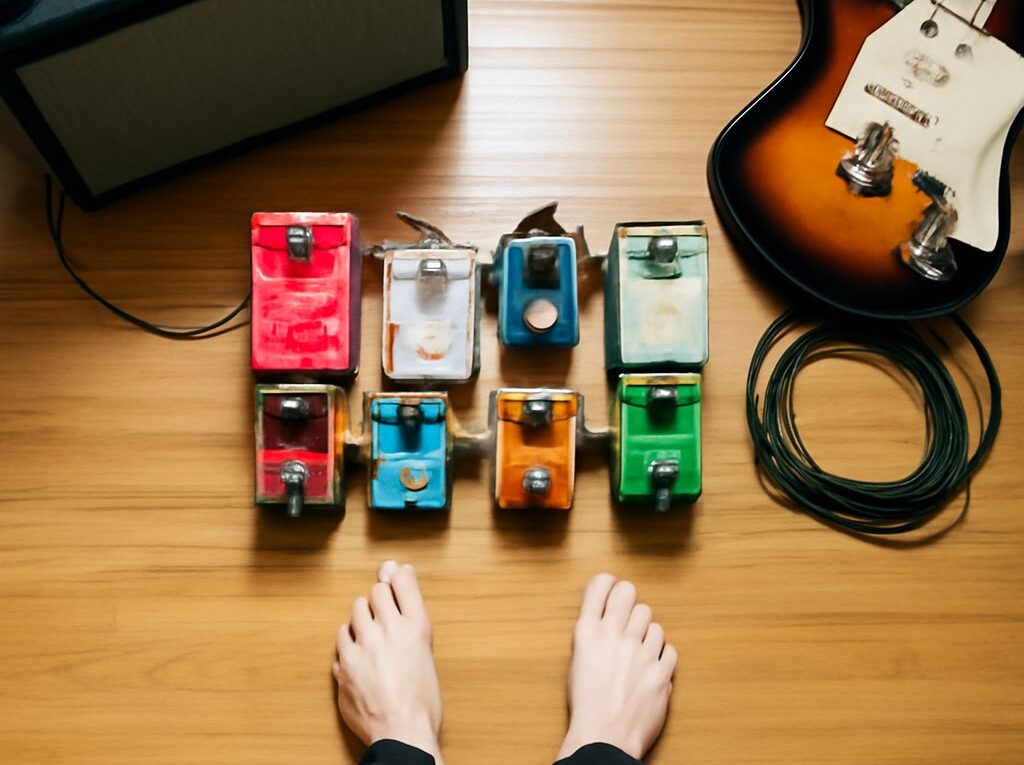
Understanding Guitar Effects Pedals
Guitar effects pedals are essential tools for musicians looking to add depth and character to their sound. These devices, often referred to as guitar foot pedals, alter the audio signal of an electric guitar to produce a wide range of effects. Whether you’re a budding guitarist or a seasoned professional, understanding how these pedals work can significantly enhance your musical creativity.
What Are Guitar Effects Pedals?
Guitar effects pedals are compact electronic units designed to modify the sound of an electric guitar. They are connected between the guitar and the amplifier, allowing players to manipulate tone, volume, and other sound qualities. Effects pedals are activated using foot switches, making them convenient for live performances. They serve various purposes, from shaping tone to creating unique soundscapes.
Types of Guitar Effects Pedals
The world of guitar effects pedals is diverse, offering numerous options to suit different musical styles and preferences. Here are some of the most common types:
Distortion Pedals
Distortion pedals are among the most popular effects pedals, especially in rock and metal genres. These pedals add grit and intensity to the guitar sound by clipping the signal, resulting in a distorted tone. Famous examples include the Boss DS-1 and the Pro Co RAT.
Delay and Reverb Pedals
Delay and reverb pedals are used to create spacious and atmospheric effects. Delay pedals replicate the guitar signal, producing echoes, while reverb pedals simulate the natural reverberation of sound in different environments. The Electro-Harmonix Memory Man is a renowned delay pedal, and the Strymon BigSky is a top choice for reverb.
Modulation Pedals
Modulation pedals alter the pitch or phase of the guitar signal, creating effects like chorus, flanger, and phaser. These pedals add movement and texture to the sound. The MXR Phase 90 is a classic phaser pedal, while the Boss CE-2 is a popular chorus pedal.
Choosing the Right Effects Pedal for You
Selecting the right guitar effects pedal depends on several factors, including musical genre, personal taste, and budget. Beginners might start with versatile options like multi-effects pedals that combine several effects in one unit. Experienced players often curate a collection tailored to specific sounds. Reading reviews and testing pedals in-store can help narrow down the choices.
Integrating Effects Pedals into Your Setup
Integrating guitar effects pedals into your setup requires consideration of signal chain order. Generally, modulation effects like chorus and flanger go after distortion in the signal chain, while time-based effects like delay and reverb are placed last. Experimentation is crucial; the order can alter the overall sound, so trying different configurations is recommended. Using a pedalboard can keep your setup organized and portable.