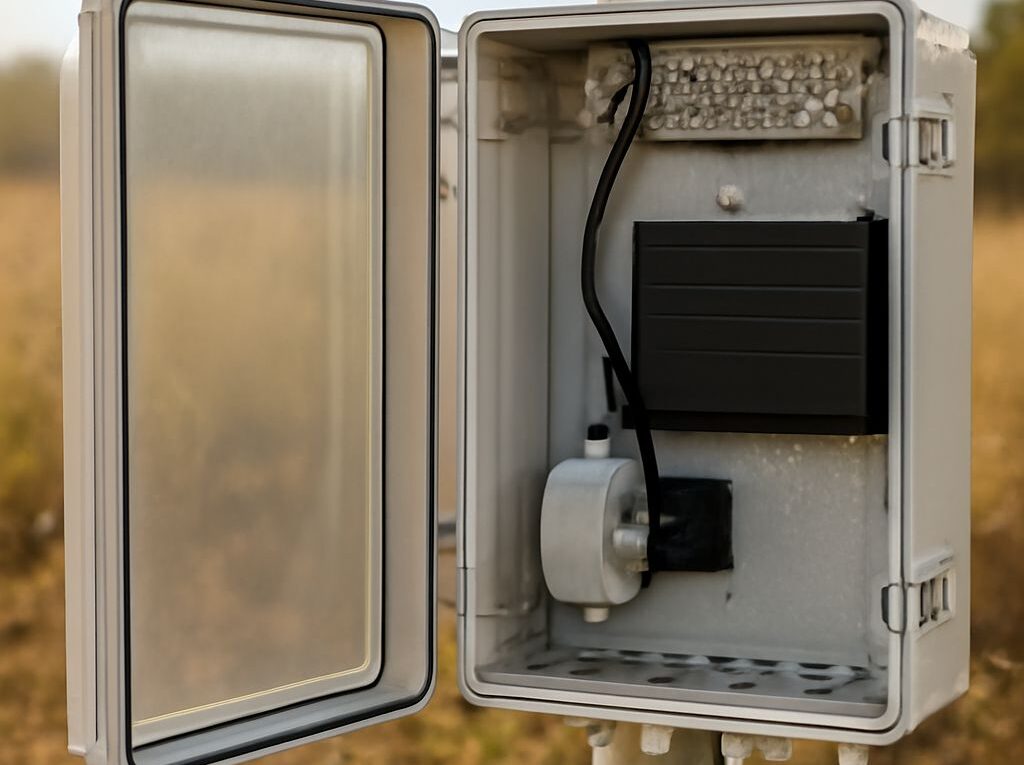
Outdoor Network Enclosure: Protect a Gateway in the Field
An outdoor enclosure for network equipment must do more than keep rain off a gateway. It must maintain suitable conditions for the installed electronics, preserve cable-entry protection, support radio performance, and allow safe maintenance. Evaluate the complete installation against the site’s weather, power, and operating needs before mounting it.
Match protection to exposure
Start with the actual location: wind-driven rain, standing water, dust, salt, direct sun, ice, and the risk of impact differ from site to site. Choose an outdoor network enclosure and fittings rated for the relevant conditions. Check the manufacturer’s instructions for mounting orientation, door seals, and permitted accessories.
IP ratings describe degrees of protection against solids and water under specified tests. NEMA Type designations also address other characteristics; the two systems are not generally interchangeable. NEMA’s enclosure guidance explains the limits of direct equivalence. Select the rating against the actual exposure, and verify that cable glands, vents, and modifications maintain the protection required for the assembled installation.
A sealed cabinet can still develop internal condensation when temperature changes cool surfaces below the dew point. Plan humidity control for the climate and equipment duty cycle, including what happens during a power interruption. Suitable heaters, drains, or pressure-equalizing vents depend on the enclosure design and must be compatible with its required protection.
Calculate the thermal conditions
Add the heat released by the gateway, power supply, and other installed components. Direct sunlight can add substantial heat, while a cold start may be more demanding than normal operation. Compare the expected internal temperature range with the operating and startup limits of every component, including batteries if present.
A larger cabinet, shade, or a sun shield may reduce heat buildup; a properly selected cooling system may be needed for a higher load. Confirm the result with a thermal assessment and measurements at representative hot and cold conditions. Ventilation changes the ingress design, so filters and vents need their own environmental ratings and maintenance plan. An outdoor network enclosure should be assessed as a complete system rather than sized by equipment dimensions alone.
Plan power, cables, and service
Allow space for bend radii, connectors, service loops, grounding and bonding provisions, and replacement of the gateway or power supply. Select cable entries for the cable type, installation orientation, and exposure; unused openings need appropriate closures. Confirm how the door can open safely and whether a technician can reach components without straining cables.
A qualified electrical professional should design and install the power, protective devices, grounding, surge protection, and any backup supply according to site requirements and applicable codes. Provide a clear means of service isolation and document the equipment inside. The enclosure for an outdoor network installation also needs a secure mounting method suitable for its weight, wind exposure, and the surface supporting it.
Preserve radio performance and visibility
A metal cabinet can attenuate signals from an antenna placed inside it. Where the gateway uses cellular or Wi-Fi, assess antenna placement, cable loss, and the approved antenna configuration at the site. External antennas and cable penetrations require suitable environmental protection and professional review of grounding and surge protection. Measure connectivity with the door closed and under the expected operating conditions.
Monitor internal temperature and, where useful, humidity and door status. Send alerts over the management connection, but also define what happens if that connection fails. Periodic inspection of seals, filters, corrosion, cable entries, and mounting hardware remains necessary for a network cabinet outdoors; remote readings do not reveal every physical fault.
Check before placement
Confirm the site’s exposures and enclosure rating; the installed equipment’s hot, cold, and power limits; the thermal and condensation plan; and the ratings of all entries. Have specialists review electrical and mounting work. Finally, test radio performance with the cabinet closed, verify monitoring and alert delivery, and make sure a technician can open and service the outdoor equipment enclosure safely.