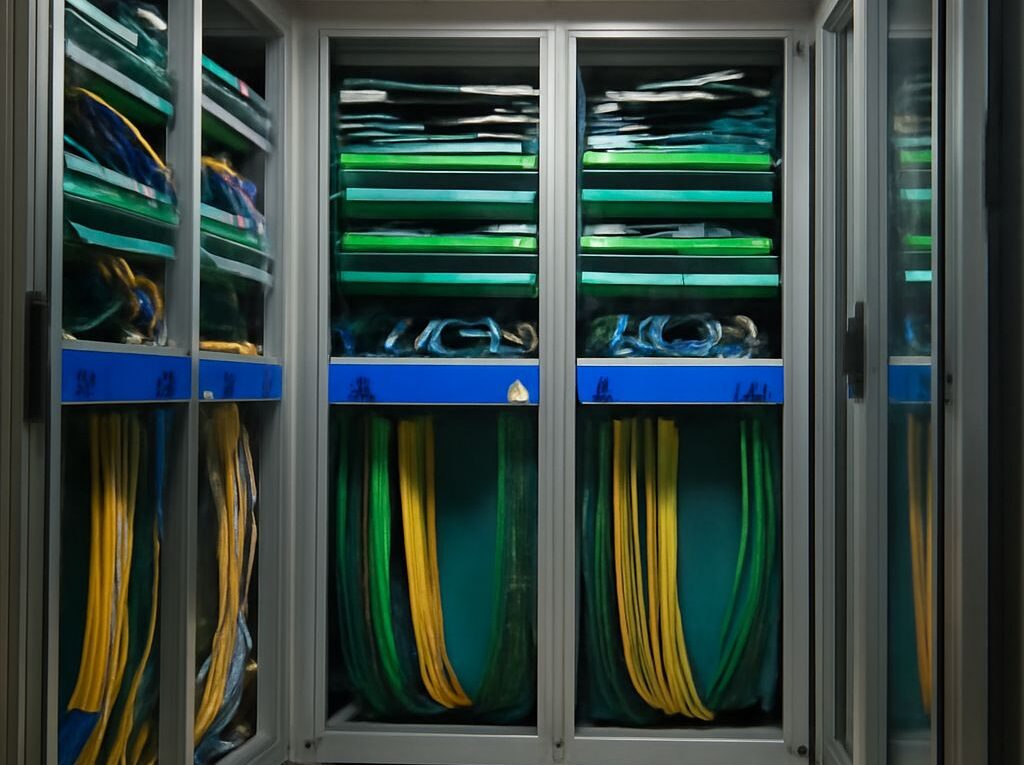
What Is an IDF Room? A Practical Guide for Modern Networks
An Intermediate Distribution Frame (IDF) room is a dedicated space within a building used to house networking equipment such as switches, patch panels, and cabling infrastructure. This room acts as a critical junction point between the main network equipment (often located in a Main Distribution Frame or MDF room) and the end-user devices spread across different floors or zones. IDF rooms play an essential role in modern network architecture, helping maintain organized, scalable, and reliable connectivity across large facilities and multi-story buildings.
Defining an IDF Room and Its Purpose
To answer what is an IDF room, it is a localized hub for terminating and managing network connections that serve a specific segment or floor of a building. Rather than running all Ethernet cables from every device back to a central location, an IDF room provides a local termination point. This approach makes cable runs shorter, reduces signal loss, and simplifies troubleshooting.
Typically, an IDF room contains network switches, patch panels, racks for organizing equipment, and sometimes uninterruptible power supplies (UPS) to protect against outages. Network cables from user workstations, wireless access points, and security devices terminate here, while backbone cables link the IDF room to the MDF room. This distribution model ensures efficient bandwidth management and a logical separation for network segments.
The primary purpose of an IDF room is to maximize network efficiency and maintain neatly organized cabling infrastructure. It helps ensure compliance with network standards and enables quick response to maintenance or future upgrades. Properly designed IDF rooms contribute to a network’s overall reliability and performance.
How IDF Networking Fits Into Modern Infrastructure
IDF networking is the practice of using distributed intermediate distribution frames to extend network connectivity throughout a building or campus. In modern infrastructure, IDF networking is fundamental because it supports high-density device deployments, scalable network segmentation, and efficient management of physical connections.
Network architects strategically place IDF rooms to minimize cable lengths and support bandwidth-intensive applications. For example, in a multi-floor office building, each floor might have its own IDF room connecting local devices to the wider network via fiber-optic or high-capacity copper uplinks. This structure prevents degraded performance that could result from running excessively long copper Ethernet cables, which have distance limitations (typically 100 meters for Cat5e/Cat6 cables).
IDF networking also enhances fault tolerance and scalability. When growth or changes are needed, new devices can be integrated into the nearest IDF room, reducing downtime and complexity. For organizations using private wireless networks or deploying hundreds of IoT sensors, leveraging IDF rooms enables rapid expansion and precise network control.
Modern IDF networking also supports power over Ethernet (PoE) deployments for connected devices like VoIP phones and security cameras, further centralizing device management and power supply through the IDF infrastructure.
Comparing IDF Rooms and Data Closets
The terms IDF room and data closet are sometimes used interchangeably, but there are important distinctions. A data closet generally refers to any secure room or cabinet that houses networking and telecommunications equipment. This might include small wall-mounted enclosures for a handful of devices or larger spaces supporting substantial infrastructure.
An IDF room is a specific type of data closet focused on distributing network connections for a particular area or floor. While all IDF rooms are data closets, not all data closets serve as IDF rooms. For example, a data closet might be used exclusively for storing backup servers, telephony hardware, or equipment racks, whereas an IDF room will always have the primary role of aggregating and managing network wiring and switches for user connectivity.
Key differences include the scale of cable management, the presence of uplinks to MDF rooms, and the criticality of their role in network topology. IDF rooms typically require stricter environmental controls, such as cooling and humidity management, because of the density of active network equipment they contain compared to basic data closets.
Why IDF Rooms Matter in Private Wireless and Ethernet Cabling
IDF rooms are essential for both wired and wireless network performance. In Ethernet cabling, they serve as intermediary distribution points that ensure cable lengths stay within signal integrity limits and facilitate logical segmentation by department or physical area. The use of multiple IDF rooms allows for easier troubleshooting and more effective network upgrades without disrupting other building zones.
For organizations deploying private wireless solutions—such as large enterprises or educational campuses—IDF rooms provide the local infrastructure to support access points, controllers, and backbone uplinks. Placing wireless hardware in or near IDF rooms reduces latency, improves coverage, and allows centralized management.
Reliability and uptime are also enhanced by distributing critical network hardware across several IDF rooms. In the event of equipment failure or maintenance in one room, other parts of the network remain unaffected. This compartmentalization is a core advantage for business continuity.
Ultimately, the design, placement, and management of IDF rooms have a direct impact on network efficiency, scalability, and long-term operational costs, making them a foundational element of any robust IT infrastructure.