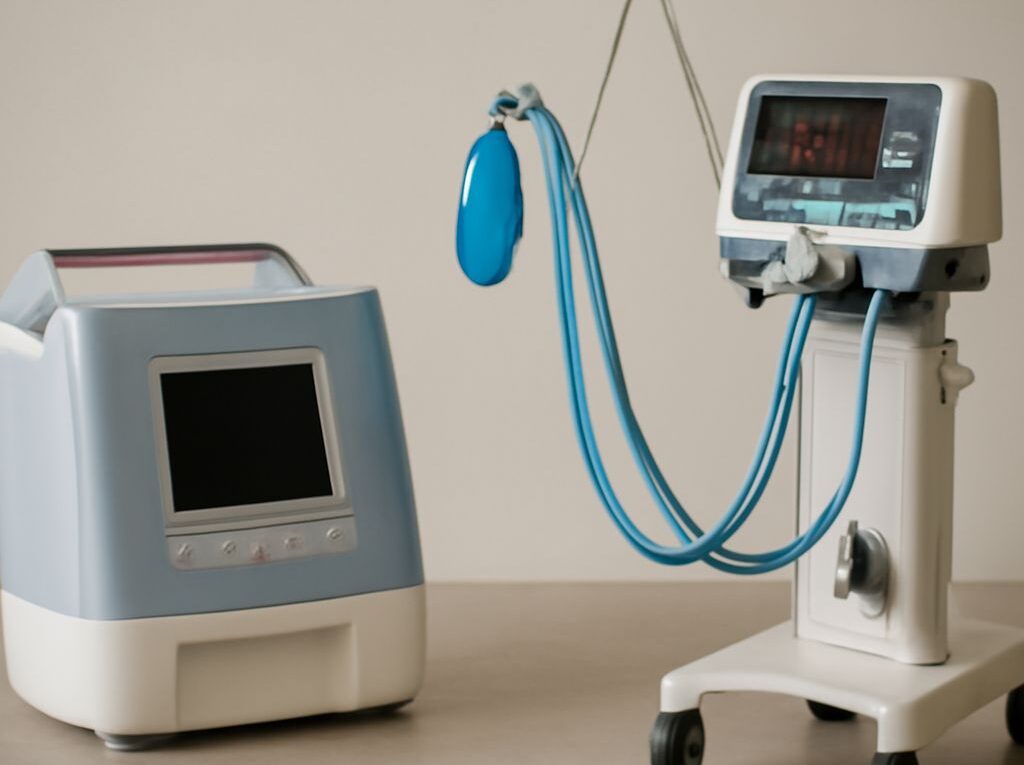
Understanding Ventilators: Duration and Types Explained
Ventilators are essential medical devices used in healthcare settings to assist or replace spontaneous breathing in patients who are unable to breathe on their own. Understanding their usage, particularly how long a patient can remain on a ventilator and the different types available, is crucial for appreciating their role in modern medicine.
How Long Can You Be on a Ventilator?
The duration a patient can be on a ventilator varies significantly based on individual health conditions and the underlying cause necessitating ventilation. Generally, patients may be on a ventilator for a few hours to a few weeks. In acute cases, such as during surgery or short-term illnesses, the use of a ventilator might be temporary and for only a few days. For patients with severe respiratory conditions or complications, longer use may be needed.
Prolonged ventilation beyond two weeks is typically regarded as long-term ventilation, which may require a tracheostomy to provide a more stable and comfortable airway. Decisions regarding the duration of ventilation are made by healthcare professionals based on continuous evaluation of the patient’s respiratory function and overall health status.
Exploring Different Types of Ventilators
There are various types of ventilators designed to meet different patient needs:
- Invasive Ventilators: These are used when a patient needs full respiratory support, requiring intubation (a tube inserted into the windpipe). They are commonly used in intensive care units (ICU) for patients with severe respiratory failure.
- Non-Invasive Ventilators: These do not require intubation and are often used for patients who need respiratory assistance but can still breathe on their own to some extent. Masks or nasal devices are typically employed in non-invasive ventilation.
- Portable/Home Ventilators: Designed for patients who require long-term ventilation outside the hospital environment, these ventilators offer mobility and ease of use in home settings.
- High-Frequency Ventilators: These deliver small breaths at a rapid rate and are often used in specific clinical scenarios, such as in neonatal care for premature infants.
The choice of ventilator type is determined by the patient’s condition, the intended duration of ventilation, and additional factors such as mobility needs and the severity of respiratory distress.
The Role of Ventilators in Healthcare
Ventilators play a vital role in modern healthcare by providing life-saving support to patients experiencing respiratory failure due to various causes, including pneumonia, chronic obstructive pulmonary disease (COPD), and during surgical procedures requiring general anesthesia. They ensure that adequate oxygen reaches the lungs while removing carbon dioxide, thereby maintaining critical respiratory functions.
In the context of pandemics, such as COVID-19, the demand for ventilators has underscored their critical importance in treating severe cases and mitigating mortality rates. Beyond acute care, ventilators also facilitate recovery by allowing health professionals to manage ventilation settings tailored to the specific respiratory needs of each patient.
Overall, ventilators are indispensable tools in both emergency and long-term care, highlighting the significance of understanding their usage and functionality in contemporary medical practice.