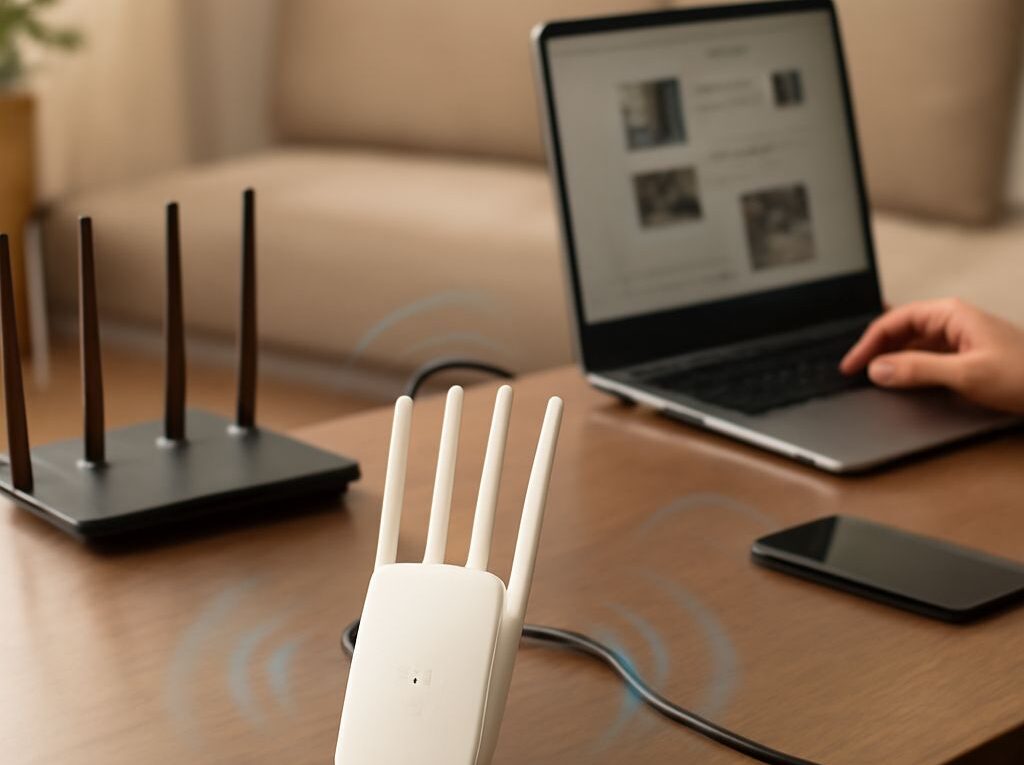
What Does a WiFi Extender Do?
WiFi extenders play a crucial role in enhancing wireless network coverage by amplifying and redistributing signals from your existing router. This technology ensures that all corners of a home or office receive a strong and reliable internet connection. Whether facing dead zones or weak signals, understanding what a WiFi extender does and how a wifi router booster can improve connectivity is essential for optimal network performance.
How WiFi Extenders Work
WiFi extenders function by capturing the WiFi signal from your existing router and rebroadcasting it to areas where the signal is weak or nonexistent. These devices typically connect wirelessly to your router and can be installed anywhere within the range of the original signal. By doing so, they effectively stretch the coverage area, ensuring that spaces previously out of reach can access the internet.
Unlike a WiFi booster that may amplify the signal from the router directly, extenders create a new network. Users can connect to this network to enjoy improved signal strength in areas where the primary network struggles. Extenders are especially useful in large homes or buildings with thick walls that can block or weaken signals.
Benefits of Using a WiFi Extender
The primary advantage of using a WiFi extender is the elimination of dead zones within a property. By expanding the network’s reach, users can enjoy seamless internet access throughout their space. This is particularly beneficial for streaming, gaming, and maintaining a stable connection for smart devices.
Additionally, WiFi extenders can enhance network performance by providing better bandwidth distribution. This means multiple devices can connect without significant drops in speed or quality. For households or offices with numerous devices, this can significantly improve overall user experience.
Cost-effectiveness is another benefit. Rather than upgrading to a more powerful router, which might be expensive, a WiFi extender provides an affordable solution to connectivity issues. This makes it an attractive option for those seeking to improve their network without significant investment.
Choosing the Right WiFi Router Booster
Selecting the appropriate WiFi router booster involves considering several factors. First, assess the coverage area needed. Larger spaces may require more powerful extenders or multiple units to ensure comprehensive coverage.
Compatibility with your existing router is crucial. Ensure that the extender supports the same WiFi standards as your router to avoid connectivity issues. Many modern extenders support dual-band technology, allowing them to provide both 2.4 GHz and 5 GHz bands, which can offer more flexibility and reduce interference.
Consider the placement of the extender. It should be within the range of your router’s signal but close enough to the areas where enhanced coverage is needed. This strategic positioning can maximize the device’s effectiveness.
Lastly, look at the features offered by different models. Some extenders come with additional Ethernet ports, which can be useful for connecting wired devices. Others offer smart signal indicators to help find the optimal location for installation. Evaluating these features against your specific needs will help in selecting the right device.