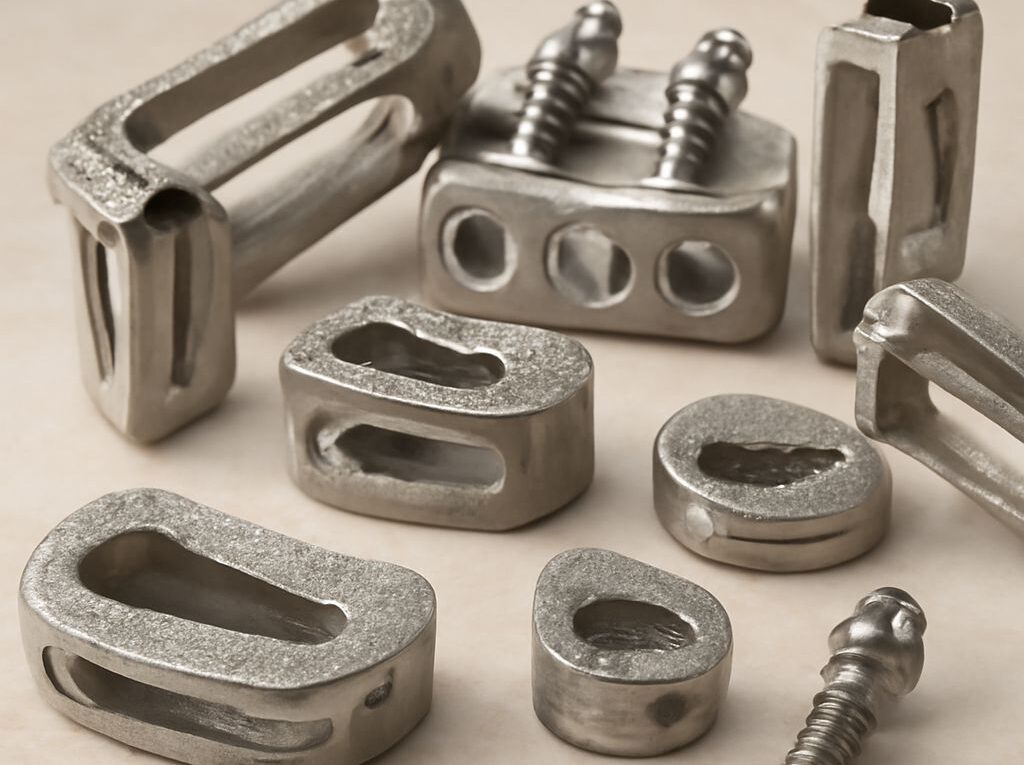
Understanding Spinal Cages: Uses and Benefits in Spinal Fusion
Spinal cages are specialized medical implants used in spinal fusion surgery to help restore the stability and function of the spine. When the spine has been compromised due to conditions such as degenerative disc disease, trauma, or deformity, a spinal fusion cage provides structural support and a scaffold for new bone growth. Understanding how these devices work, their types, and their benefits is crucial for patients considering spinal fusion as a treatment option.
What Is a Spinal Cage?
A spinal cage is a small, hollow device that is surgically implanted between two vertebrae in the spine. Its primary function is to maintain proper spacing between the vertebrae after a damaged disc has been removed. By holding the bones in the correct alignment, the cage creates an environment where bone graft material can be placed, allowing the vertebrae to eventually fuse into a single, solid bone.
Spinal cages are commonly used in spinal fusion procedures and are designed to mimic the natural height and alignment of the removed disc. Their shape—usually cylindrical, rectangular, or wedge-like—ensures a stable fit within the intervertebral space. The cage’s hollow center is packed with bone graft, which promotes bone growth through and around the implant over time.
The main goal of a spinal cage is to provide both immediate stability and long-term support while the fusion process occurs. This approach helps reduce pain and restore function by preventing movement between the affected vertebrae.
How Spinal Cages Support Spinal Fusion
During spinal fusion surgery, the surgeon removes a damaged or degenerated disc and prepares the vertebral surfaces to accept a spinal cage. The spinal cage is then packed with bone graft—either from the patient (autograft), a donor (allograft), or synthetic materials. Once positioned between the vertebrae, the cage restores normal spacing and alignment, which is critical for proper spinal biomechanics.
The design of the spinal cage allows for immediate load-bearing, meaning it helps support the body’s weight right after surgery. Over time, the bone graft inside and around the cage fuses with the adjacent vertebrae, creating a single, immobile segment. This fusion eliminates painful movement at the affected level and helps maintain spinal curvature and balance.
Spinal fusion cages are also often used in combination with other surgical hardware, such as rods, screws, or plates, to provide additional stability throughout the healing process. The combination of internal fixation and a spinal cage significantly increases the likelihood of a successful fusion and long-term spinal stability.
Types of Spinal Cages and Their Materials
There are several types of spinal cages, each designed for specific spinal conditions and surgical approaches. The most common types include:
- Anterior Lumbar Interbody Fusion (ALIF) Cages: Placed from the front of the spine, these cages are often larger and can help restore disc height and lumbar curvature.
- Posterior Lumbar Interbody Fusion (PLIF) Cages: Inserted from the back, PLIF cages are typically used in pairs for added stability.
- Transforaminal Lumbar Interbody Fusion (TLIF) Cages: Placed from a diagonal approach, designed to reduce nerve retraction and minimize tissue disruption.
- Cervical Cages: Used in the neck (cervical spine), these are smaller and tailored for the unique anatomy of the cervical vertebrae.
Spinal cages are made from biocompatible materials to ensure safety and effectiveness. Common materials include:
- Titanium: Known for its strength, lightweight nature, and compatibility with the body, titanium is widely used for spinal fusion cages. Its metallic structure also allows for visibility on X-rays.
- PEEK (Polyether Ether Ketone): This strong, plastic-like material is radiolucent, meaning it does not show up on X-rays, making it easier to monitor the progress of bone fusion. PEEK is also similar in flexibility to natural bone.
- Carbon Fiber: Less common but valued for its radiolucency and strength, carbon fiber cages are sometimes chosen for specific cases.
Benefits and Considerations of Spinal Fusion Cages
The main benefits of using a spinal fusion cage include improved spinal stability, enhanced bone growth, and reduced risk of disc height loss. By restoring the natural spacing between vertebrae, spinal cages can relieve nerve compression and reduce chronic pain caused by spinal instability. The rigid structure of the cage also helps maintain proper spinal alignment during the healing process.
Another advantage is the promotion of successful bone fusion. The cage’s design encourages bone to grow through and around it, creating a solid connection between vertebrae. This can reduce the need for additional surgeries and improve long-term outcomes. The choice of material, such as titanium or PEEK, can be tailored to the patient’s needs and help optimize post-surgical imaging and healing.
However, spinal fusion cages do require a healing period, and risks such as infection, implant migration, or incomplete fusion can occur. Not every patient is a candidate for this type of surgery; factors such as bone quality, overall health, and specific spinal conditions will influence the treatment approach. Consultation with a spine specialist is essential to determine if a spinal fusion cage is appropriate for an individual’s situation.
In summary, spinal cages play a pivotal role in spinal fusion surgery, offering patients with challenging spinal problems a path to restored stability, reduced pain, and improved function.