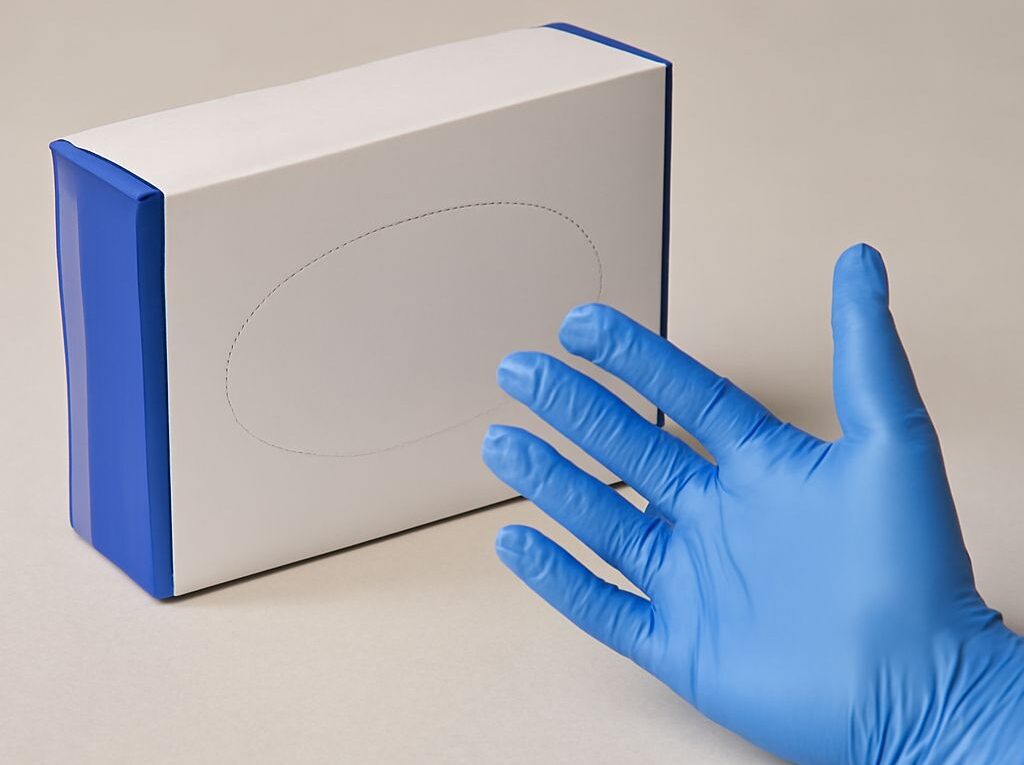
Understanding NBR Material: What Are Nitrile Gloves Made Of?
NBR material, also known as nitrile butadiene rubber, is the synthetic polymer that forms the foundation of nitrile gloves. Understanding what are nitrile gloves made of starts with an examination of this unique compound and how it is transformed into one of the most widely used types of disposable gloves in healthcare, laboratories, and industrial settings. Below, we explain how NBR material is produced, processed, and why it is chosen for critical barrier protection.
What is NBR Material?
NBR material stands for nitrile butadiene rubber, a synthetic rubber copolymer composed primarily of acrylonitrile and butadiene. These two monomers are combined through a process called emulsion polymerization, resulting in a durable, flexible, and chemically resistant material. NBR is sometimes referred to as Buna-N or simply nitrile rubber. Its chemical structure is engineered to offer resistance to oils, fuels, and many chemicals, making it an ideal choice for environments where exposure to hazardous substances is a concern.
The properties of NBR can be adjusted by changing the ratio of acrylonitrile to butadiene during synthesis. A higher acrylonitrile content increases resistance to oils and chemicals, while additional butadiene enhances flexibility and softness. This tunability allows manufacturers to create NBR grades suited to specific glove applications, from medical examination gloves to heavy-duty industrial protection.
NBR’s main advantage over natural latex rubber is its synthetic origin, which completely eliminates natural rubber latex proteins. This means NBR material is hypoallergenic, reducing the risk of allergic reactions among users sensitive to latex.
In addition to gloves, NBR material is used in products like fuel hoses, gaskets, seals, and automotive parts due to its resilience and chemical resistance. However, it is the glove industry where its use is most widespread and recognizable.
How NBR Material is Used to Make Nitrile Gloves
Nitrile gloves are manufactured through a multi-step process that begins with the creation of liquid NBR latex. Unlike natural latex, which is harvested from rubber trees, NBR is synthesized in large reactors. The resulting latex is a stable, milky liquid suspension of NBR particles in water. This latex formulation can be fine-tuned for viscosity, solid content, and additive compatibility to meet glove production requirements.
Glove production begins with ceramic or metal hand-shaped formers that are cleaned and dipped into the NBR latex. Coagulants such as calcium nitrate are often applied first to promote even coating and ensure the latex adheres uniformly. The formers are slowly withdrawn from the latex, forming a thin, consistent film of NBR around each former.
This wet film is then passed through ovens where it is heated to initiate vulcanization—a chemical curing process that crosslinks the NBR polymer chains. Vulcanization strengthens the glove, improves elasticity, and enhances chemical resistance. After curing, the gloves are washed to remove residual chemicals and proteins, then dried and stripped from the formers, usually with the aid of compressed air or mechanical means.
Lastly, the gloves are tested for quality, rolled at the cuff for donning ease, and packaged. This manufacturing approach yields a glove that offers the durability, barrier protection, and tactile sensitivity required for professional use.
Key Benefits of Nitrile Gloves
Nitrile gloves offer several advantages that stem from the inherent qualities of NBR material. First and foremost, they provide superior resistance to a wide array of chemicals, including oils, greases, solvents, and some acids and bases. This makes them a safer option for laboratory workers, healthcare providers, and industrial employees who encounter hazardous substances.
Another key benefit is puncture resistance. Compared to latex or vinyl gloves, nitrile gloves are typically more resistant to tears, cuts, and abrasions, offering a greater level of protection during tasks that involve handling sharp instruments or rough materials. Their strength does not come at the expense of comfort; modern manufacturing techniques produce thin, flexible gloves that offer excellent tactile sensitivity and a snug fit.
As NBR material is entirely synthetic, nitrile gloves are free from natural latex proteins, making them suitable for users with latex allergies. They also feature a lower risk of skin irritation and are generally more durable in storage, with a longer shelf life compared to natural latex gloves.
Finally, nitrile gloves are available in a range of thicknesses, textures, and colors, catering to different professional needs and helping to visually distinguish between glove types or contamination risks in multi-use environments.
When to Choose Nitrile Gloves Over Other Options
Choosing nitrile gloves is recommended in situations where chemical resistance, puncture resistance, and hypoallergenic properties are priorities. Healthcare settings extensively use nitrile gloves for medical examinations, surgical procedures, and laboratory work, especially where exposure to bloodborne pathogens or harsh disinfectants is possible. Their resistance to chemicals also makes them indispensable in laboratories, cleaning operations, and automotive or industrial settings where exposure to oils, fuels, and solvents is routine.
For individuals or workplaces with a history of latex allergies, nitrile gloves provide essential protection without the risk of allergic reactions. They are also the preferred option in environments where glove durability and integrity under strain are critical, such as in food processing, mechanical repairs, and environmental cleanup.
While vinyl gloves are often chosen for low-risk, short-duration tasks due to their lower cost, and latex gloves are valued for their superior flexibility, nitrile gloves strike a practical balance between performance, safety, and comfort. Their versatility and reliability continue to make them the material of choice for both disposable and reusable glove applications across many industries.