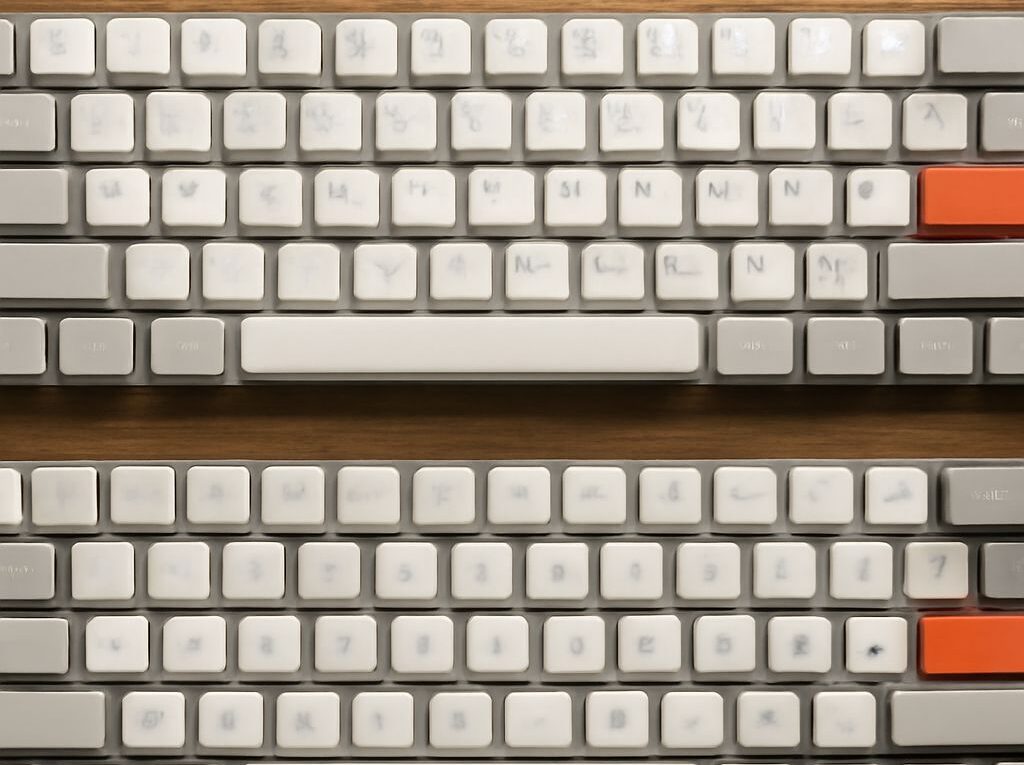
Understanding the ANSI Keyboard Layout: A Practical Guide
The ANSI keyboard layout is the standard keyboard arrangement most widely used in the United States and several other countries. Recognizable by its distinct placement of keys and specific dimensions for certain keys, the ANSI layout shapes the typing experience for millions of users. Its configuration affects not just typing comfort and speed, but also compatibility with software, hardware, and networked IT environments. Understanding the ANSI layout’s features and use cases is essential for IT professionals, network administrators, and anyone who regularly interacts with computing devices.
What is the ANSI Keyboard Layout?
The ANSI keyboard layout refers to a specific key arrangement standardized by the American National Standards Institute. The most common form is the ANSI 104-key layout, which is prevalent in full-size keyboards sold across the United States. The defining characteristics include a rectangular “Enter” key, a left Shift key that is longer than its international counterparts, and a backslash key positioned above the Enter key. The spacebar, Tab, and Backspace keys are also of standard width, contributing to a familiar and efficient typing flow.
ANSI layout keyboards are typically recognized by their horizontal Enter key, as opposed to the L-shaped Enter key found in some other standards. The ANSI standard governs not only the physical placement of keys but also their function, making it easier to design and support compatible hardware and software. This consistency is particularly useful in environments where many users may switch between devices or operating systems.
When discussing ANSI layout, it is important to note that this standard primarily applies to English-language and US-market keyboards. While similar layouts exist internationally, such as ISO and JIS, the ANSI specification has become the de facto standard for most US-based computing equipment.
Because of its prevalence, the ANSI keyboard layout is often the default option on new systems, especially in North America. Users become accustomed to its positioning, making workflow changes or international transitions more noticeable when a different standard is encountered.
Key Features and Benefits of the ANSI Layout
One of the most notable features of the ANSI layout is its ergonomic and straightforward design. The long left Shift key is favored by touch typists for ease of access. The horizontal Enter key is less prone to accidental presses, which can be an issue with alternative designs. The location of the backslash and pipe key just above the Enter key is essential for programming and network administration tasks, making these symbols easy to reach on an ANSI keyboard layout.
The ANSI layout supports full compatibility with the vast majority of US-based operating systems, applications, and firmware configurations. Most mainstream software expects ANSI conventions, reducing the risk of input errors or mismatches. This consistency extends to keyboard shortcuts, scripting, and command-line operations—key considerations for IT and network professionals.
Manufacturers of mechanical and membrane keyboards commonly follow the ANSI standard, ensuring that keycap sets, replacement parts, and customizations are widely available. For organizations, this makes procurement, maintenance, and user support more straightforward, especially in large fleet deployments.
The uniformity of the ANSI layout also facilitates efficient training, onboarding, and troubleshooting. When all employees or users are working with the same key arrangement, support documentation and IT procedures can be standardized, lowering the learning curve and reducing support requests.
Why the ANSI Layout Matters in Network Services
In network services environments, the ANSI layout provides practical advantages. When configuring network devices, entering commands, coding scripts, or troubleshooting, a familiar key arrangement can significantly reduce errors and speed up workflows. The placement of essential symbols such as the backslash, pipe, and tilde keys is optimized for rapid access, which is particularly valuable when dealing with command-line interfaces or network configuration files.
Remote administration tools, virtualization software, and terminal emulators in the US tend to assume the ANSI key mappings. This reduces complications when sending keyboard commands to remote systems. For teams that collaborate across multiple locations or support remote users, standardizing on the ANSI keyboard layout ensures consistent key mapping, avoiding confusion and minimizing costly mistakes.
Furthermore, in security-sensitive environments, consistency in keyboard layouts reduces the likelihood of input errors that could lead to misconfigurations or vulnerabilities. This is especially important when entering passwords, cryptographic keys, or complex command sequences. Network administrators benefit from the predictability and muscle memory developed using the ANSI layout.
Comparing ANSI to Other Keyboard Layouts
The ANSI keyboard layout differs from the ISO (International Organization for Standardization) and JIS (Japanese Industrial Standard) layouts in key placement and size. For example, the ISO layout features a shorter left Shift key and an added key next to it, while the Enter key is typically L-shaped. The JIS layout, predominantly used in Japan, introduces additional keys for language switching and symbols.
For users accustomed to the ANSI layout, switching to ISO or JIS can introduce a learning curve. Key combinations, particularly those involving symbols used in programming or network administration, may be harder to access. This can slow down experienced users or generate errors in fast-paced work environments.
While the ANSI layout is dominant in the US and often preferred for coding, writing, and network management, the ISO layout is common in Europe, and JIS is standard in Japan. Selecting the appropriate layout depends on region, language, and use case, but for US-based network services, the ANSI layout remains the most practical and widely supported choice.